Category: Computer Science and Philosophy

  • The Forgotten Art of Crossword Creation

    It is Friday, and the Mecca of AI is bracing for the soap opera of the year: the Musk vs. Altman et al. trial. One can only hope that the lawyers won’t use again the bespoke AI tools to generate the legal arguments hallucinations that embarrassed Wall Street.

    Today’s journey back in time is going to take us to 1993 in post-communist Bulgaria. It was only a few years after one day at school we were told to stop addressing the teachers as “comrade” and start using the “Mr.” and “Mrs.” honorifics.

    I was going to school, and my computer was a Bulgarian clone of the IBM XT. I think at some point I had 20MB hard drive but I am not sure about that. Doing what many of the lucky generations did, I was hanging out at computer clubs while one day somebody challenged me to write a computer program that generates crosswords.

    So I did. Today I dug it up, compiled it, and put the sources on my GitLab server, for no other reason but to entertain the reader. Sadly, I lost the knowledge of Bulgarian Cyrillic code tables, so there is a nice little project for when I have time.

    I remember that CPU power was same expensive during the years and I often left friends’ PCs with the state-of-the-art blazing fast at the time 80486 Intel process overnight to generate the crosswords that I was selling to the local Varna newspapers. It would take an hour to make a moderately small crossword puzzle. I ran the program yesterday, and it took a few seconds to fill the grid of the crossword shown above.

    At the time I didn’t know that the problem is NP-hard, but I designed my algorithm to be sound and complete and I am a bit proud of my teenage self given that the OpenAIs and Anthropics of the Mecca seem to have forgotten this exact type of human knowledge. I guess Altman or Amodei were too busy fraternizing to take CS 101 or logic.

    Expect next week: more on using real computer science and algorithms for EDA and hopefully on Friday VmWare images generating crossword puzzles with Windows 3.1 and a small digression to a clone of Wordle.

    Ceterum censeo slopem esse delendam.

    (Cato the Elder ended every speech in the Roman Senate with “Carthage must be destroyed” — regardless of the topic. This is that, but for AI slop.)
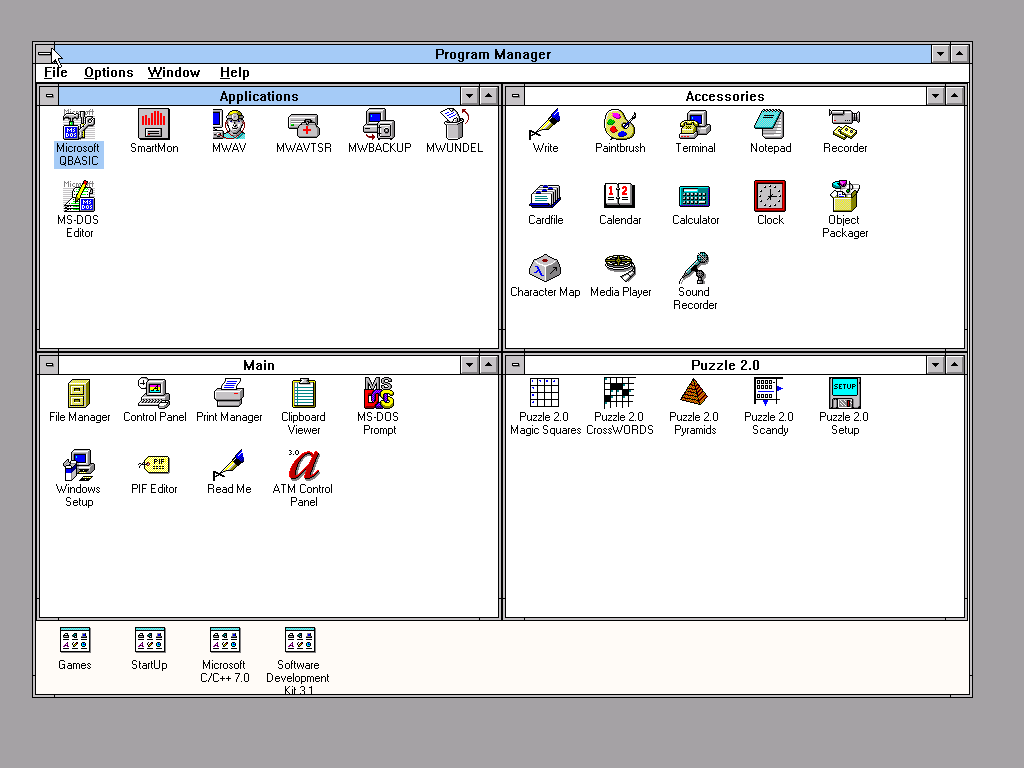
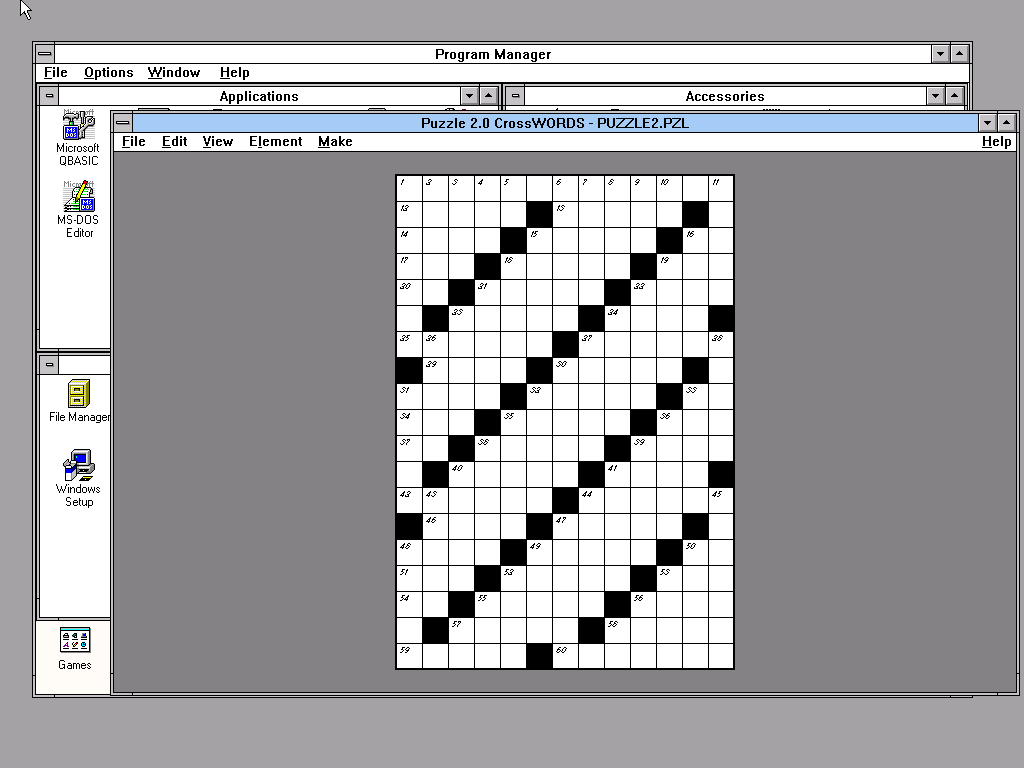
    Repository of this post:


    https://gitlab.llama.gs/attic/puzzle

  • AI-Generated Spaghetti Slop Considered Harmful

    The Balkanization of AI is happening: Google fights OpenAI fights Microsoft fights Meta, while I am pondering on how early I should go to Oakland’s court to get free entertainment from seeing the Musk vs Altman trial. Why this is going to entertain me is probably analogized by the shrinks with the phenomenon of why relatively educated people in Europe listen to turbo folk music. Good that the court system does not (still) allow avatars as Zuckerberg throws considerable amount of energy into building his own AI duplicate.

    In the background of all this, I am quietly growing my circuit analysis and synthesis framework. Last week I wrote about DSLs and their advantages. Today I decided to implement the parser. It took me half an hour, and this is the lark grammar:

    start: (import|module)+
    
    import: IMPORT ESCAPED_STRING
    
    module: MODULE CNAME "(" ports ")" ":" (gate | wires | instantiation)* END
    
    ports: port (";" port)*
    
    port: (INPUT | OUTPUT) CNAME array? ("," CNAME array?)*
    
    gate: CNAME ":" CNAME "=" CNAME "(" CNAME ("," CNAME)* ")"
    
    wires: CNAME ("," CNAME)*
    
    instantiation: INST CNAME CNAME "(" assignment ("," assignment)* ")"
    
    assignment: CNAME array? "=" CNAME array?
    
    array: "[" INT (":" INT)? "]"
    
    IMPORT: "import"
    MODULE: "module"
    END: "end"
    INPUT: "input"
    OUTPUT: "output"
    INST: "inst"
    
    %import common.INT
    %import common.CNAME
    %import common.ESCAPED_STRING
    %import common.WS
    %import common.SH_COMMENT
    
    %ignore WS
    %ignore SH_COMMENT
    

    Just out of curiosity, I wanted to see how bad the slop generator is, and ChatGPT did not fail to disappoint. I will not put here the generated grammar as I want to preserve the reader’s sanity, but it is ugly and 71% longer. It also generated an Abstract Syntax Tree that is 36% bigger. If I was a research assistant in compiler construction, such a homework would immediately get grade five (in The Netherlands, where I studiedwent to university) grades are from one to ten, one to five are all failing grades, I suppose it is good to know that you almost made the exam).

    Of course, this grammar produces an Abstract Syntax Tree that has too much detail for good analysis. Luckily, Lark provides AST transformation classes which promise to be tidy and neat and different from slop. That is what is going to be my next GitLab push.

    Ceterum censeo slopem esse delendam.

    (Cato the Elder ended every speech in the Roman Senate with “Carthage must be destroyed” — regardless of the topic. This is that, but for AI slop.)

  • Teaching a Language to Think in Hierarchies

    Bitcoin miners are liquidating their holdings to pivot into AI hosting. The machines that wasted electricity producing imaginary money will now waste it producing imaginary intelligence. Anthropic has secured 3.5 gigawatts of compute — the consumption of three and a half million households — to serve language models.

    GCC compiles the entire Linux kernel in fifteen minutes on a single machine drawing 200 watts. Fifty watt-hours. A light bulb left on for an afternoon. It manages this because it is not guessing. It has a grammar, a type system, and an optimisation pipeline where every transformation preserves semantics. There is no temperature parameter. There is no “try again and hope.”

    A compiler’s cost is \(O(n \log n)\) in the size of the input. A language model’s cost is \(O(n \cdot d)\) where \(d\) is the dimensionality of a model that cannot tell you whether the answer is correct. When the task has a formal specification, you do not need gigawatts. You need a parser.

    I have been writing parsers for twenty years. Today I started improving the one that matters most: the circuit description language at the heart of llogic, qbf-designer, and the formal methods toolchain I am building at Llama Logic.

    My first encounter with a compiler was at Zend Technologies in Ramat Gan in 2000. I was twenty-two, fresh off the plane from Bulgaria, and I did not know what a parser was. Zend built the PHP language engine. I watched a small team turn a grammar into a working language that ran half the web. I did not understand how.

    A few years later, at Delft, I read the Dragon Book and took the compiler construction course of Koen Langendoen. We became friends over my many years at the university. That course turned out to be one of the most useful things I have ever learned. It is the skill that lets me write software that works — not approximately, not statistically, not when the vibes are right, but deterministically, on all inputs, by construction.

    It is also how I got into diagnosis. At the end of my master’s I went to Koen and asked for a Ph.D. position in compiler construction. He told me “compilers are passé” — but I could go work with Arjan J.C. van Gemund doing diagnostics. Arjan has since retired north to compose music, which is a better use of a fine mind than supervising Ph.D. students, though he was good at both. They needed a compiler for LyDiA, the diagnostic modelling language. So I built one. Then I built many more. Every research system I have worked on since — LyDiA, the DXC framework at NASA Ames, the synthesis tools at PARC, and now llogic — has a parser at its core. The compiler is never the point. The compiler is always the point.

    A domain-specific language is a small language built for one job. SQL is a DSL for databases. Regular expressions are a DSL for pattern matching. Makefiles are a DSL for build dependencies. You do not write an operating system in SQL. You do not query a database with a Makefile. The language fits the problem, and because it fits, it can enforce constraints that a general-purpose language cannot.

    This is the point that the vibe-coding movement misses entirely. A grammar is not a convenience. It is a contract. When I write a parser for a circuit description language, the grammar specifies exactly what constitutes a valid circuit. If you misspell a gate type, the parser rejects your input. If you connect an output to a nonexistent signal, the parser tells you. If you instantiate a module that does not exist, you get an error message with a line number — not a plausible-looking circuit that silently computes the wrong function.

    This is what determinism means in practice. The parser either accepts or rejects. There is no 95% confidence. There is no temperature. The same input produces the same result every time, on every machine, for every user. A QBF solver receiving a malformed netlist will produce garbage. A diagnosis engine receiving an inconsistent model will compute meaningless results. The parser is the gate that keeps garbage out. It costs milliwatts. It works.

    There is a second reason, less often discussed. Humans need to read these things. An engineer debugging a faulty adder needs to look at the circuit description and understand it. A reviewer verifying a synthesis result needs to confirm that the specification matches the intent. This is not a machine-to-machine format. It is a language — with the same design obligations as any language: clarity, consistency, and the ability to say exactly what you mean and nothing else.

    The circuit DSL in llogic had outgrown its grammar. The new format adds modules, arrays, imports, and arbitrary nesting. A full adder, from primitives to a 4-bit module with array slicing:

    # 4-bit ripple carry adder
    
    import "std_logic.circ"
    
    module half_adder(input a, b; output s, c):
        x: s = xor(a, b)
        a: c = and(a, b)
    end
    
    module full_adder(input a, b, ci; output s, co):
        wire f, p, q
    
        inst half_adder ha1(a=a, b=b, s=f, c=p)
        inst half_adder ha2(a=ci, b=f, s=s, c=q)
        o: co = or(p, q)
    end
    
    module adder2(input a[2], b[2], ci; output s[2], co):
        wire c0
    
        inst full_adder bit0(a=a[0], b=b[0], ci=ci, s=s[0], co=c0)
        inst full_adder bit1(a=a[1], b=b[1], ci=c0, s=s[1], co=co)
    end
    
    module adder4(input a[4], b[4], ci; output s[4], co):
        wire cm
    
        inst adder2 lo(a=a[0:1], b=b[0:1], ci=ci, s=s[0:1], co=cm)
        inst adder2 hi(a=a[2:3], b=b[2:3], ci=cm, s=s[2:3], co=co)
    end

    Four levels of nesting. Modules, arrays, slices, named connections. The flattener — a recursive tree walk, the same algorithm I used in LyDiA for system descriptions — traverses the instantiation tree and emits the flat netlist the solver has always consumed. The hierarchy is for the engineer. The solver does not know it exists.

    Sequential circuits work the same way. A 4-bit serial adder with synchronous reset:

    # 4-bit serial adder with synchronous reset
    
    module shift4(input d, rst; output q):
        wire d1, d2, d3
    
        f1: d1 = dff(d, rst)
        f2: d2 = dff(d1, rst)
        f3: d3 = dff(d2, rst)
        f4: q = dff(d3, rst)
    end
    
    module seq_adder4(input a, b, rst; output s, co):
        wire i1, i2, ci
    
        inst shift4 sa(d=a, rst=rst, q=i1)
        inst shift4 sb(d=b, rst=rst, q=i2)
        inst full_adder fa(a=i1, b=i2, ci=ci, s=s, co=co)
        c: ci = dff(co, rst)
    end

    A dff with one argument is a plain register. Two arguments: synchronous reset. This maps directly to the standard Verilog template always @(posedge clk) if (rst) q <= 0; else q <= d; — making translation between the two languages mechanical.

    So why not just use Verilog?

    Because Verilog is a simulation language that has been coerced into serving as a synthesis input. A synthesis tool reads an always block, pattern-matches the sensitivity list, and infers what is a register and what is combinational logic. The engineer writes behaviour and hopes the tool’s heuristics match their intent. In llogic, a dff is a dff. An and is an and. There is no inference. The circuit says what it is.

    This matters for formal methods. Diagnosis requires knowing exactly what components exist. Synthesis requires a precise specification of the design space. Neither tolerates a language that hides structure behind inference rules. Verilog is the right language for RTL designers who want to describe behaviour and let tools figure out the structure. Llogic is the right language when the structure is the point.

    The parser, AST, and flattener should take a few days. When they are done I will update the llogic repository on the feature/hierarchical-dsl branch.

    Three and a half million households’ worth of electricity to serve a model that cannot tell whether it is thinking deeply or not. Fifty watt-hours to compile a kernel. Considerably less to parse a circuit. The tools that work have always been quiet, small, and correct. The software will continue to not hallucinate.

    Ceterum censeo slopem esse delendam.

    (Cato the Elder ended every speech in the Roman Senate with “Carthage must be destroyed” — regardless of the topic. This is that, but for AI slop.)

    Repository: llogic

  • What’s Actually Broken

    Amazon’s weekly operations meeting in March reportedly focused on a “trend of incidents” characterised by “high blast radius” and “Gen-AI assisted changes.” The Financial Times, which saw the briefing note, reported that AI-generated code had been implicated in a series of outages — including one that took down Amazon’s entire e-commerce website for several hours. Amazon’s response was to deny the problem existed, which is the corporate equivalent of the AI itself: confidently wrong and hoping nobody checks. James Gosling, the creator of Java, who left AWS in 2024, was less diplomatic. He observed that the company’s AI-driven restructuring had “demolished” the teams responsible for infrastructure stability, and that the ROI analysis behind the decision was, in his words, “disastrously shortsighted.” One does not need a diagnostic engine to identify the fault here. A company replaced the engineers who understood its systems with a technology that does not, and the systems fell over. The circuit breaker that the AI removed — the one it classified as “redundant” — had been added after a previous outage. The AI could not distinguish a safety mechanism from dead code, because it had no model of the system. It had statistics. Statistics told it the breaker rarely fired. A model would have told it why.

    This is the difference between machine learning and model-based reasoning, and it is the difference that this post — and the toolchain I am releasing today — is about.

    An Unexpected Reception

    Yesterday’s post announcing qbf-designer, a tool for exact digital circuit synthesis via Quantified Boolean Formula solving, generated rather more attention than I had anticipated. Twenty-two thousand LinkedIn impressions, a hundred-odd reactions, and five hundred profile views in twenty-four hours, for a post about problems at the second level of the polynomial hierarchy and FPGA technology mapping. One concludes that there is an audience for work that produces correct answers, even — or perhaps especially — in an era when the prevailing technology cannot reliably tell you which end of a circuit is up.

    Dusting Off the Arsenal

    To continue with my plans for commercialising formal methods for EDA through Llama Logic Corporation, I have to excavate, modernise, and release the full inventory of tools and concepts I have built over nearly two decades. There are many reusable components in this stack — logic representations, solver bindings, encoding schemes, diagnostic algorithms — and they need to be cleaned up, documented, and made available. The qbf-designer release was the first. Today’s is the second.

    Today I am releasing LyDiA, a language and toolchain for Model-Based Diagnosis. LyDiA was the core of my doctoral research at Delft University of Technology. I will not be using LyDiA itself going forward — the modern llogic packages have fixed all of its imprecise notions and provide a cleaner foundation for everything I am building — but LyDiA was where it all started. It was my first serious work on the diagnosis of circuits, and it contains ideas and algorithms that remain relevant. It deserves to be available.

    Model-Based Diagnosis in 15 Seconds

    The demo takes two inputs. The model (2adder-weak.sys) describes a two-bit full adder — a hierarchical composition of half-adders built from XOR and AND gates. Every gate has a Boolean health variable: true means the gate works correctly, false means it is faulty and its output is unconstrained. We do not specify how a gate fails, only that its output can no longer be trusted. This is called a weak fault model.

    The observation (2adder.obs) records what actually happened: specific values on the inputs and outputs of the circuit that are inconsistent with correct behaviour. Something is broken. We do not know what. The diag command hands both files to the GOTCHA engine — which computes all minimal sets of component failures that explain the discrepancy. Not one guess. Not the most likely answer. Every combination of gate failures that is logically consistent with the model and the observation, with no redundancy.

    The fm command lists the results: six double-fault diagnoses, each a minimal set of gates whose simultaneous failure is sufficient to produce the observed misbehaviour. For example, d4 = { !FA.HA1.X.h, !FA.O.h } means the XOR gate in the first half-adder and the OR gate are both broken. There is no single-fault explanation — at least two gates must be faulty, and the engine has proven this by exhaustive enumeration.

    Why Circuits?

    Writing software to diagnose a fabricated IC does not make practical sense. You would use ATPG and scan chains for that. We use digital circuits as benchmarks because they have the properties that matter for diagnosis research: compositional structure, many components, well-defined fault models, and known-correct reference behaviour. These are the same properties that make diagnosis hard in complex engineered systems generally. This is why the ISCAS-85 suite has been the standard MBD benchmark for thirty years.

    Where diagnosis does apply directly in EDA is design verification. Suppose an engineer places a NAND gate instead of an AND gate for the carry computation in the adder above. The circuit passes some tests but fails on specific input vectors. The diagnostic engine, given the intended specification and the observed misbehaviour, will isolate the carry gate as the faulty component — even if the designer has never seen this particular mistake before, even if there are multiple simultaneous design errors. It reasons from the structure of the circuit, not from a database of past bugs.

    The Modelling Problem

    During my early attempts at commercialisation, I encountered a pattern that I suspect anyone in formal methods has seen. People looked at LyDiA diagnosing circuits and said: “Wonderful. Can it diagnose my HVAC system? My chemical plant? My supply chain?” And so they tried to model non-circuits as circuits, and things did not work, because the difficulty of modelling is the hard part.

    Circuit diagnosis is tractable in part because digital circuits have a natural, compositional, Boolean structure. An AND gate is an AND gate. An HVAC system is a tangle of continuous dynamics, feedback loops, thermal gradients, and human behaviour. Cramming that into a Boolean framework requires heroic abstraction, and the resulting models are either too coarse to be useful or too large to be solvable. The aerospace fuel system model included in LyDiA — with its typed fault modes for leaking tanks, stuck sensors, and degraded pumps — hints at what multi-valued modelling can achieve, but it remains a toy compared to the real thing.

    That said, LyDiA was never only about circuits. The distribution includes models of the N-queens problem, map colouring, Sudoku, and SEND+MORE=MONEY — general constraint satisfaction problems expressed in the same language. The diagnostic framework is, at its core, a constraint solver with a notion of health variables. This generality is both its strength and its curse: it can express anything, but making it useful for a specific domain requires domain expertise that no tool can substitute.

    What LyDiA Got Wrong: Probability

    LyDiA assigns fault probabilities to components — each gate gets a prior like 0.99 healthy, 0.01 faulty — but the probabilistic reasoning was never worked out correctly. The probabilities were treated as independent priors, multiplied together to rank diagnoses, with no rigorous account of how observations update beliefs or how correlations between faults propagate through the system.

    The correct formulation turns out to be a #P problem — a counting problem. To compute the exact posterior probability of a diagnosis, you need to count the satisfying assignments of the diagnostic formula: how many ways can the internal signals of the circuit be assigned such that the model, the observation, and a given fault assumption are all consistent? The probability of a diagnosis is the ratio of its satisfying assignment count to the total. This is model counting, and it is #P-complete — harder than NP.

    One consequence is that all diagnostic probabilities are rationals. They are ratios of integers — counts of discrete satisfying assignments. This has some puzzling implications for the relationship between fault probability and physical failure rates that I have not yet fully worked out.

    There is also a quantum angle. Faults are inherently stochastic — a gate either works or it does not, and before you test it, the fault state is indeterminate in precisely the sense that a qubit is indeterminate before measurement. I showed in earlier work that placing health qubits in superposition and propagating them through a quantum circuit that mirrors the classical circuit under diagnosis computes the full probability distribution over all diagnoses simultaneously. This connects to von Neumann’s foundational work on the relationship between logic and probability. The practical implication is Grover’s algorithm: a quadratic speedup for searching the diagnostic space. I need to finish this work and implement a proper Grover-based diagnostic engine. It is on the list.

    Why Machine Learning Cannot Do This

    In February, a company called Algorhythm Holdings — formerly a manufacturer of karaoke machines, with a market capitalisation of six million dollars — announced that its AI platform could “optimise” freight logistics, scaling volumes by 300–400% without adding staff. The announcement wiped seventeen billion dollars off U.S. transportation stocks in a single day. C.H. Robinson fell 15%. RXO fell 20%. The Russell 3000 Trucking Index dropped 6.6%. DHL, DSV, and Kuehne+Nagel followed in Europe. All of this because a former karaoke company claimed, in effect, to have solved optimal planning — a problem that is PSPACE-complete. If Alan Turing and Stephen Cook could be reached for comment, I suspect they would have questions.

    The same magical thinking pervades “AI for diagnostics.” A machine learning model trained on historical failures will recognise patterns it has seen before. Show it a novel fault — a combination that never appeared in the training data — and it has nothing to generalise from. It will either misclassify the failure or express high confidence in a wrong answer. This is not a limitation that more data or a larger model can fix. It is a structural property of inductive inference: you cannot learn what you have not observed, and complex systems fail in ways that are combinatorially vast and fundamentally unpredictable from examples alone.

    Model-based diagnosis does not have this problem. If you have a model of the system, you can diagnose faults you have never observed, in configurations you have never tested, because the reasoning is deductive rather than inductive. The SAT solver asks: is there an assignment of health variables that is consistent with the model and the observations? The answer is provably correct with respect to the model. This is why NASA uses model-based diagnosis for spacecraft and why the automotive industry uses it for on-board diagnostics. Nobody uses a neural network to diagnose a flight-critical system. The neural network might get it right 95 percent of the time. The other 5 percent is a smoking crater.

    What’s Next

    The modern diagnosis packages in llogic have addressed all of LyDiA’s imprecisions — cleaner encodings, correct probabilistic inference, proper multi-valued support — but those are a story for a separate post.

    There is also Lydia-NG, a framework I built that extends model-based diagnosis to analog systems using a built-in SPICE simulation engine. Rethinking Lydia-NG connects us directly to the analog side of EDA — a domain where formal methods have barely made an appearance and where the tools are, to put it charitably, showing their age.

    And that is the longer ambition. Cadence Virtuoso dates from 1991 — thirty-five years old. Vivado is newer (2012), but its place-and-route lineage descends from NeoCAD, acquired in 1995, and its synthesis from MINC, acquired in 1998. Synopsys Design Compiler has been around since the late 1980s. The EDA industry is running on architectural foundations that predate the web browser. These tools work — in the sense that a 1991 Toyota also works — but the algorithms inside them are heuristic, the interfaces are hostile, and nobody has rethought the fundamentals in decades.

    The goal of Llama Logic Corporation is to challenge this. Modern EDA with proper AI-augmented formal methods — analog, digital, and FPGA. New languages. New solvers. New tools. Not “AI for EDA” in the Silicon Valley sense of wrapping an LLM around Verilog and hoping for the best, but the real thing: algorithms with correctness guarantees, backed by the mathematical foundations that already exist and that the industry has been too comfortable to adopt.

    In the next instalment, I will demonstrate qbf-designer doing FPGA technology mapping — covering a small circuit with k-input Look-Up Tables. The formal methods stack is growing. The software works. It does not hallucinate.

    The repository: LyDiA — language and toolchain for Model-Based Diagnosis.

  • Diagnosing Circuits into Existence

    Cadence recently unveiled ChipStack AI, which El Reg memorably described as “vibe coding for chips.” The idea is that an LLM agent will design your next processor for you, provided you don’t mind the occasional hallucinated transistor. One Reg commenter recalled Jensen Huang’s declaration that nobody needs to learn programming anymore, and suggested he try designing his next GPU with it. Quite. Meanwhile, a water desalination company spent $200,000 on AI-generated engineering advice that turned out to be — and I use the technical term — wrong. They then built a second AI to filter out the nonsense from the first one, which is the silicon valley equivalent of hiring a second drunk to drive the first one home. One does wonder what the industry will achieve once it sobers up. In the meantime, I have been doing something unfashionable: using mathematics to design circuits that are provably correct.

    Today I am releasing qbf-designer, a tool for exact digital circuit synthesis from arbitrary component libraries via Quantified Boolean Formula solving. It is the top of a dependency stack that has also been modernised and released: llogic for logic representation, transformation, and solving; lcfgen for generating circuit primitives used both in the QBF encoding itself and as benchmark specifications; and a collection of solver bindings — pydepqbf, pylgl, pyllq, and pycudd — that connect the Python layer to the C/C++ solvers doing the actual heavy lifting. The software works. It synthesises provably minimal circuits from specifications. It found a five-gate full-subtractor that improves on the seven-gate textbook design. It does not hallucinate.

    Now, explaining what “provably minimal circuit design” actually means turns out to require rather more than a single blog post — so this is the first in a series. The short version: given a functional specification (“I want a circuit that adds two numbers”) and a bag of components (“here are some AND, OR, and XOR gates”), find the smallest circuit that does the job. The practical application is technology mapping for FPGAs, where you need to cover a circuit with k-input Look-Up Tables using as few LUTs as possible. The silicon is already on the chip and you have already paid for it — every LUT you save is space freed for more logic, letting you fit a larger design onto the same device. Current industry tools — Vivado, Yosys — use heuristics for this. qbf-designer gives you the exact answer, at least for sub-circuits small enough to chew on. Early results are promising: on a 2-bit comparator mapped to 3-LUTs, the solver finds a 5-LUT implementation where heuristic methods produce 6. One does not need to be a venture capitalist to notice that 5 is fewer than 6.

    There is a fundamental difference between this work and the “AI for chip design” circus currently touring Silicon Valley. Circuit synthesis — the problem of finding a minimum-size circuit equivalent to a specification — sits at the second level of the polynomial hierarchy (Σ₂ᵖ-complete, for those keeping score). This is not a problem you can solve by autocompleting Verilog. It has a precise computational complexity classification, a formal proof of correctness, and a guarantee of optimality. In other words, it is science, the kind that involves theorems rather than pitch decks, and where “it works” means something more rigorous than “the demo didn’t crash during the investor meeting.”

    My interest in circuit synthesis comes from an unexpected direction: breaking things. I spent years working on Model-Based Diagnosis of digital circuits — the problem of figuring out which component in a circuit has failed, given observed misbehaviour. My colleague Johan de Kleer, who has been thinking about this sort of thing since before most AI entrepreneurs were born, used to describe synthesis as “diagnosing a circuit into existence.” The idea is beautifully perverse: start with an empty circuit, treat the absence of every gate as a “fault,” and ask the diagnostic engine what collection of fixes would make the circuit behave like, say, a 32-bit ALU. It turns out that the mathematical machinery for diagnosis and synthesis is nearly identical — the same ∃∀ quantifier structure, the same miter-based equivalence checking, the same PSPACE-hard satisfaction problems. The only difference is whether you are looking for what went wrong or what should be there in the first place.

    The theoretical foundations and experimental results have been written up and submitted to Constraints, a journal that publishes work reviewed by people who can tell the difference between a proof and a press release. The paper covers the QBF encoding, the universal component cell, the configurable interconnection fabric, symmetry breaking, and extensive benchmarks on arithmetic circuits, 74XXX integrated circuits, and exact synthesis function sets. I mention this not to boast but to draw a gentle contrast with the prevailing approach to AI research in the Valley, where the peer review process consists of checking whether the blog post got enough likes on Twitter X and the replication methodology is “we lost the weights.” Should the reviewers find fault with the work, they will at least be able to point to a specific equation rather than gesturing vaguely at a loss curve and muttering about emergence.

    In the next instalment, I will demonstrate qbf-designer doing FPGA technology mapping — taking a circuit, mapping it to k-input Look-Up Tables, and producing a result that uses fewer LUTs than Xilinx Vivado. Not by a little. Not by accident. By mathematics.

  • An Essay on Computation

    Since ancient time, humans have been building surprisingly intelligent computers. Computation is a very broad term. It happens not only in man-made computers but also in nature. The basis of computation is deceptively simple: if there is a notion of memory, one can count. By using counting, it is possible to perform addition. Addition is in the basis of multiplication. With addition and multiplication we are half-way there, having almost all of mathematics. Of course, this opening argument just promote me to be the dean of the faculty of gross generalization.

    One of the fundamental foundational questions, popularized by Scientific American, is if the universe is analog or digital. While the correct answer is probably “neither and both, it is quantum, it is the solution of the Schrödinger equation for all particles in the universe, it is a complex vector that only the universe can compute”, I find quantum computers juxtaposing analog and digital concepts. A qubit is a superposition (linear combination) of zeros and ones although there is nothing special about choosing zero and one. It is possible, and although sounding exotic, I am sure there are, quantum computers whose state is made of ternary (for example) qubits.

    Let’s switch the topic and talk about errors in computation. All our machines make errors and everything around us is imperfect. What is worse, is that people want to scale computation, taking the output of one computational block and feeding it to another. Modern computational platforms are truly humongous. An average Pentium processor has thousands of NAND-gates. A NAND-gate is the basic logical computational building block of modern von-Neumann computing. As we will see in more technical detail in subsequent posts, a NAND gate is a very primitive device. Even to add two 16-bit numbers we need hundreds of them.

    A NAND gate in the device on which you are reading this is made out of CMOS transistors. The CMOS transistor is an analog device, even though we use only two voltages values (the values depend on the process being used), there is always some amount of noise, leakage, and imperfection. The ingenious thing behind the NAND gate is that, after feeding the input voltages, the electrical circuits of the NAND gate bring the output to either the power ground or to the power supply rail. These two latter values are used for logical zero and one. Let’s say that zero is everything between 0 V and 1.5 V and one is everything between 3V and 5V. This means that no matter if we take 0.1 V and 4.5 V as inputs or 1.2 V and 3.2 V, the output will always be close to 5V, no matter what. So, a NAND gate is self-error-correcting in a way. This allows the scaling-up and chaining of thousands of gates and we know that the Boolean zero/one result is always correct.

    Now you have a taste of what I will be writing about. I will try to be practical, precise, sciency, comprehensible, understandable, and fun. And, of course, I will be writing about many things. As one of my favorite Dutch expression says about “koetjes en kalfjes” (Google DuckDuckGo it).